
2026-10-02 · Dale Harlan
Open-Cell vs. Closed-Cell Spray Foam: Which Is Right for Your Home?
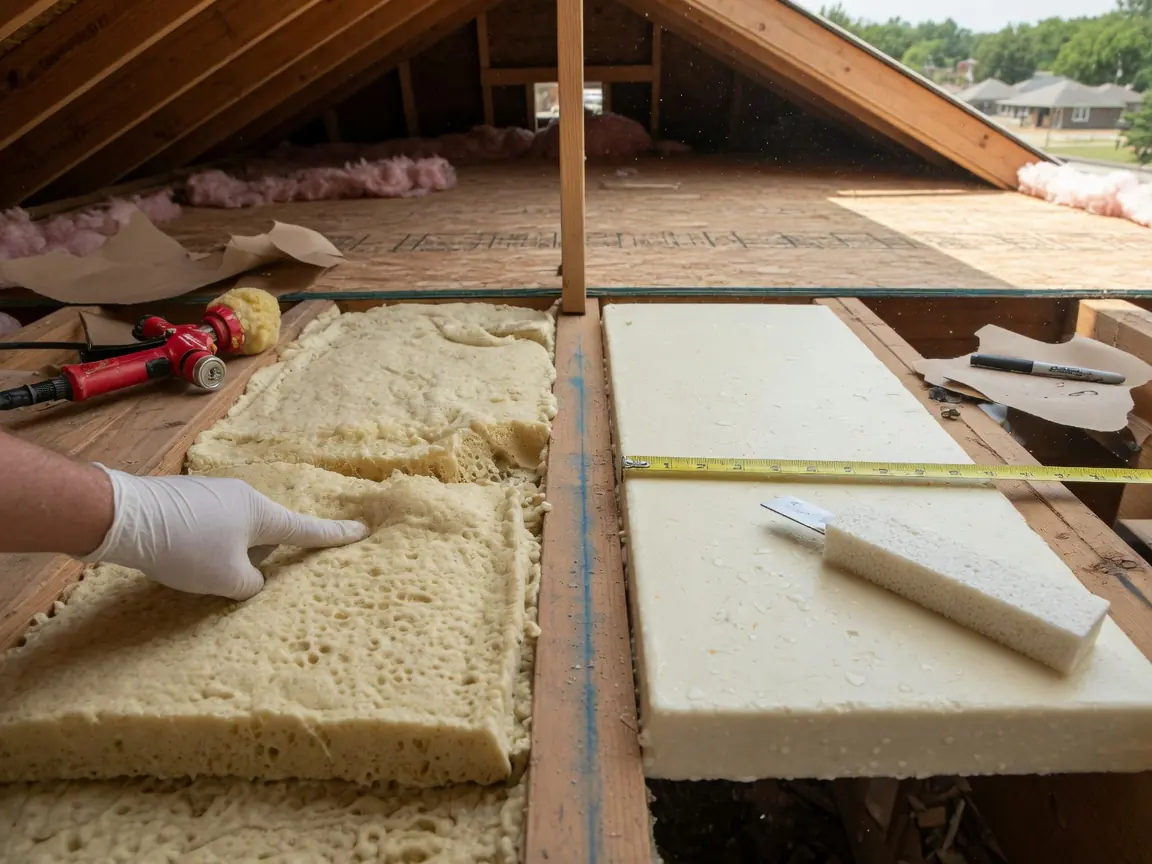
For most homes in Sand Springs, closed-cell spray foam provides the stronger match when moisture resistance and structural support matter most, though open-cell remains effective in dry attic spaces of homes built before 1980 in neighborhoods like older Sand Springs neighborhoods.
Understanding Open-Cell Spray Foam
Open-cell spray foam expands to fill gaps with a lower density structure that allows air movement while still blocking heat transfer. In Sand Springs homes near Keystone Lake, this type performs well in attics where summer heat builds quickly and mild winter temperatures rarely demand extra rigidity. Installers apply it at 2 pounds per cubic foot density, creating an R-value around 3.6 per inch that suits ventilated spaces in Prattville ranch houses. The material stays flexible after curing, which helps in areas with minor settling common to Tulsa County soil. Homeowners often pair it with existing fiberglass in older stock to cut energy use without sealing every seam.
Understanding Closed-Cell Spray Foam
Closed-cell spray foam forms a rigid barrier at 2 pounds per cubic foot that stops both air and water vapor. Sand Springs properties exposed to humid summers benefit from its ability to block moisture migration from Keystone Lake humidity into crawl spaces and wall cavities. It delivers an R-value of 6.5 to 7 per inch, making it suitable for metal buildings and pole barns common along Highway 412 toward Mannford. The added strength can reinforce roof decks in homes facing high winds during Oklahoma storms. Application requires precise temperature control during the hot months when ambient conditions exceed 90 degrees.
Key Differences in Performance
Open-cell allows some vapor transmission, which suits attic applications where ventilation prevents trapped moisture in older Sand Springs homes. Closed-cell creates a full vapor barrier, reducing condensation risks in basements and rim joists of homes built on the flatter terrain near Sapulpa. Open-cell costs less per board foot and expands more to seal irregular cavities in older Tulsa County construction. Closed-cell adds structural value but requires more material for the same coverage. Local crews adjust ratios based on whether the job targets new construction in Keystone or retrofits in Prattville.
Cost Considerations for Sand Springs Projects
Open-cell typically runs about $0.45 to $0.80 per board foot installed, while closed-cell falls between about $1.00 and $2.00 per board foot. Factors like access to attics in older Sand Springs neighborhoods or crawl spaces near Charles Page Memorial Stadium influence final pricing. Larger jobs in metal buildings along the Arkansas River corridor often favor closed-cell for long-term durability. Homeowners in Mannford can expect higher material needs due to pole barn sizes common there. Quotes account for square footage, existing insulation removal, and seasonal scheduling around mild winters.
Choosing the Right Type for Local Homes
Homes in Prattville with vented attics often benefit from open-cell to maintain airflow while cutting cooling loads during hot summers. Properties near Keystone Lake with higher humidity levels perform better with closed-cell in crawl spaces to limit moisture entry. Metal building owners in the Sand Springs area frequently select closed-cell for its condensation control, as detailed in related guidance on preventing moisture issues. Older stock in older Sand Springs neighborhoods may combine both types depending on wall versus attic needs. Consult local application details at 8635 W 21st St for site-specific assessment.
Reviewing your home's construction, location relative to Keystone Lake, and current insulation helps narrow the choice between these options. Sand Springs Spray Foam Insulation Heroes operates Monday through Friday from 8am to 6pm and Saturdays 9am to 2pm to support local projects.